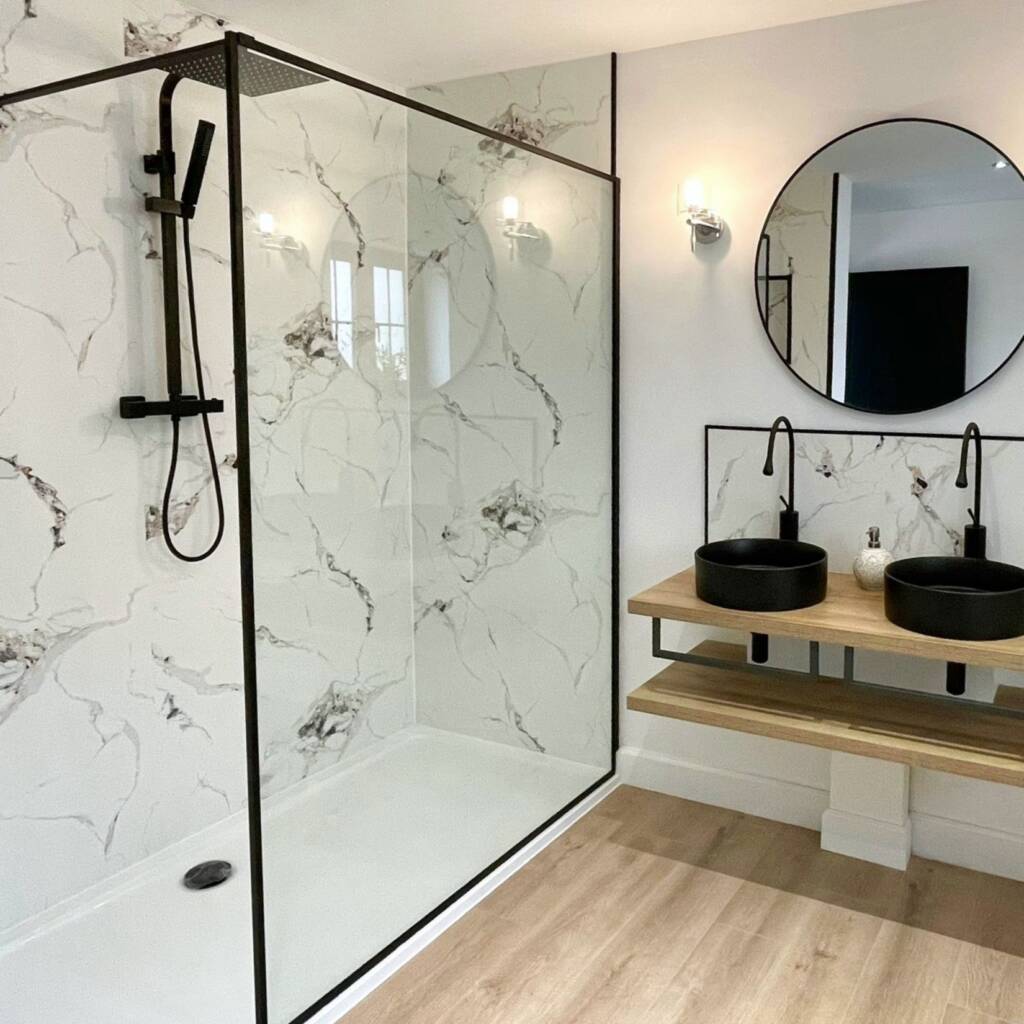
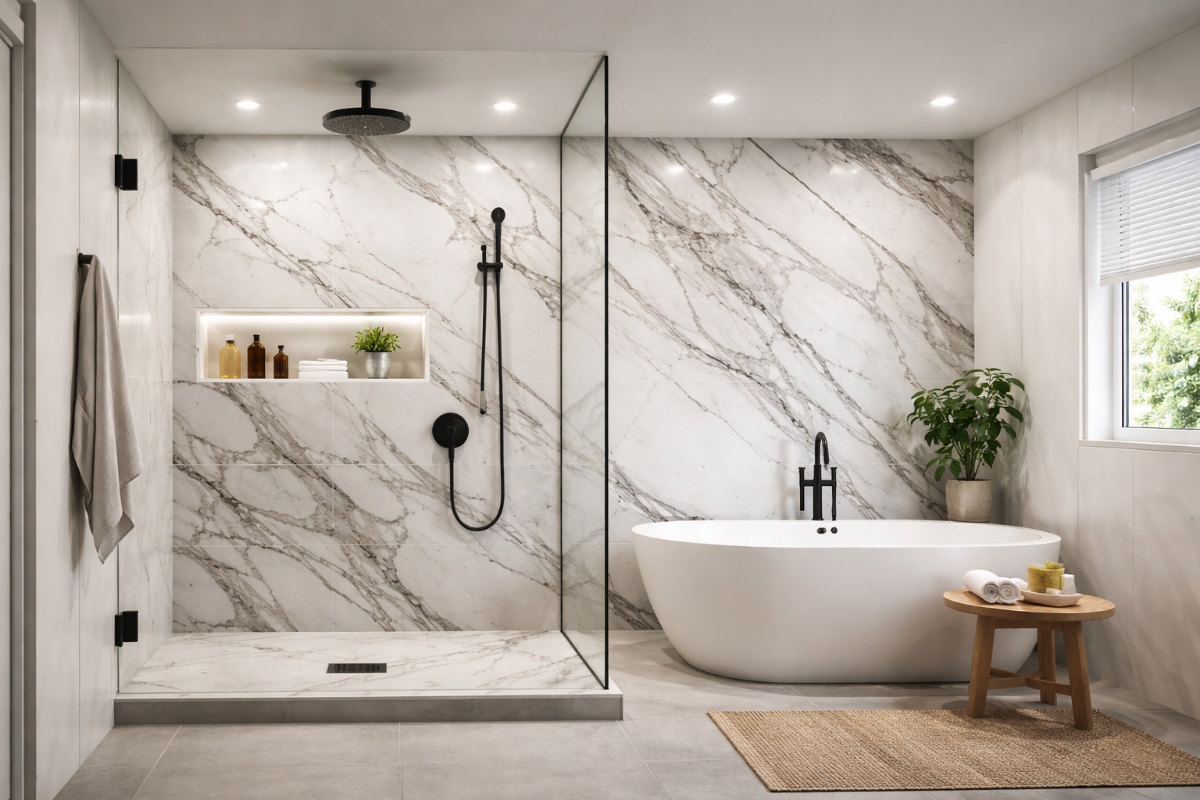
Modern bathrooms are changing. Homeowners are moving away from traditional tiles and grout lines and choosing cleaner, faster, more practical solutions. At the centre of that shift are shower panels.
If you’re researching shower panels in 2026, whether you’re a homeowner planning a renovation, a landlord upgrading a property, or a tradesperson looking for efficiency and durability, this guide will walk you through everything you need to know.
From materials and waterproofing to costs, insulation, installation and design trends, this is the complete guide to modern shower panels and explains why they have become one of the fastest-growing bathroom solutions in the UK.
What Are Shower Panels?
Shower panels are large-format waterproof wall panels designed to replace traditional wall tiles in bathrooms, shower enclosures and wet rooms. Instead of installing individual tiles with adhesive and grout, shower panels are fitted in larger sections, often using a tongue-and-groove or click-lock system.
The result is a seamless, grout-free finish that is:
- 100% waterproof
- Faster to install than tiles
- Easier to clean
- More cost-efficient long term
Modern shower panels are typically made from PVC or composite materials and are designed specifically for high-moisture environments.
Unlike tiles, which rely on grout joints that can crack, stain or harbour mould, shower panels create a continuous waterproof surface.
Why Shower Panels Have Grown in Popularity
Over the past five years, demand for shower panels has increased significantly across the UK. There are several reasons for this shift.
First is speed. Trades can install panels much faster than tiles. There’s no grout drying time, no cutting dozens of individual tiles, and far less labour involved. For professionals, this means better margins and quicker project turnaround.
Second is hygiene. Grout is the weak point in tiled bathrooms. It discolours, attracts mould, and requires ongoing maintenance. Shower panels remove that problem entirely.
Third is design evolution. Early PVC panels were basic and limited in appearance. Today’s shower panels include marble effects, stone finishes, sparkles, solid contemporary colours and high-end designer styles that rival premium tile aesthetics.
For homeowners who want a modern bathroom without weeks of disruption, shower panels are now the logical choice.
Are Shower Panels Really Waterproof?
One of the most common questions people ask is whether shower panels are genuinely waterproof.
When installed correctly with proper trims and sealant, high-quality shower panels are completely waterproof. They are specifically manufactured for wet environments such as shower enclosures and wet rooms.
Unlike tiles, where waterproofing relies heavily on grout integrity, shower panels form a sealed surface. This makes them particularly suitable for:
-
Family bathrooms
-
En-suites
-
Rental properties
-
High-traffic homes
-
Commercial washrooms
It’s still important that installation process – All of our panels are in line with UK building regulations and good practice, particularly in wet zones.
Solid Shower Panels vs Hollow PVC Panels
In 2026, one of the biggest conversations in the industry is around solid shower panels.
Standard hollow PVC panels are lightweight and cost-effective. They are ideal for budget renovations and DIY projects.
Solid shower panels, however, offer:
-
Greater rigidity
-
Improved impact resistance
-
A more premium feel
-
Enhanced longevity
Trades increasingly favour solid panels because they feel more substantial and durable once installed. They are especially popular in new builds and higher-end refurbishments. Both solid shower panels and hollow cavity shower panels serve their purpose, the standard hollow cavity and more than enough for a busy family bathroom. The solid shower panels add piece of mind for landlords who don’t want to worry about tenant breakages.
Are Shower Panels Cheaper Than Tiles?
Cost comparisons are more nuanced than many think.
At material level, tiles can sometimes appear cheaper per square metre when on a clearance offer. However, the true cost of tiling includes:
-
Adhesive
-
Grout
-
Trims
-
Waterproof backing boards
-
Labour time
-
Drying time
Shower panels often reduce installation time dramatically, which reduces labour costs. For trades, time is money. For homeowners, less disruption matters.
When comparing full project costs, shower panels are 99% of the time more cost-effective than traditional tiling — especially when factoring in long-term maintenance savings. keep in mind that tiling requires the grouting to be redone after so many years, PVC shower panels never needs to be grouted. They’re simply cleaned down with hot soapy water.
Installation: DIY vs Professional
Another major driver of popularity is ease of installation.
Many modern shower panels use a tongue-and-groove system that allows panels to slot together cleanly. They can often be installed:
-
Directly onto plasterboard
-
Over existing tiles
-
Onto suitable flat surfaces
DIY homeowners increasingly choose shower panels because the installation process is more forgiving than tiling – Installing the panels yourself allows you to save massively on the overall renovation cost, this is a deciding factor by many when weighing up the option of self installation or hiring a trade in.
That said, for larger bathrooms or full renovations, professional installation ensures:
-
Perfect alignment
-
Proper sealing
-
Long-term waterproof reliability
The choice ultimately comes down to your situation, If your able to afford the installation costs it would be everything a lot easier for yourself. if your OCD and need perfection you can take your time and install the panels yourself.
Design Trends for 2026
Bathroom design is moving towards clean, natural, calming aesthetics.
The biggest shower panel trends for 2026 include:
- Marble-effect panels remain strong, especially light grey and white veining styles that mimic natural stone.
- Warm stone and concrete effects are growing, particularly in contemporary homes.
- Matte finishes are increasing in popularity as homeowners move away from high-gloss everything.
- Sparkle finishes remain popular in family bathrooms and rental upgrades.
- A lot of our customers decide to colour clash the shower panels against flooring.
Do Shower Panels Help With Insulation?
While shower panels are not primary insulation products, they do offer modest thermal benefits compared to tiles.
Because they are installed as full sheets and often sit on top of existing surfaces, they can:
-
Reduce minor draught penetration
-
Provide a slight thermal barrier
-
Feel warmer to the touch than ceramic tiles
For homeowners renovating older properties, this can contribute to a more comfortable bathroom environment.
Maintenance and Cleaning
One of the strongest long-term benefits of shower panels is maintenance.
There is no grout to scrub. No mould trapped in joints. No discoloured lines.
Cleaning typically involves warm soapy water and a soft cloth. Harsh abrasives should be avoided, but ongoing maintenance is minimal compared to tiled surfaces.
This ease of cleaning makes shower panels ideal for:
-
Busy families
-
Rental properties
-
Holiday lets
-
Commercial settings
Environmental and UK Manufacturing Considerations
Increasingly, customers want to know where their products are sourced and manufactured.
UK-based production reduces transport emissions and supports local industry. It also provides reassurance around quality standards and supply chain stability. We continue to increase our UK range and have several new designs to launch this year.
The UK production unfortunately does come at a premium, The manufacturing costs are a lot higher. The price is easily offset against the quality, certain designs need to flow from one panel to another for a continued look. Designs from the far east cant do this, The UK panels can! an example of this is our Natural Stone Pennine 1m panels, The design is a small split face tile effect which if not married up correctly would stick out like a sore thumb, The pattern on the right hand side of the panels perfectly flows into the panels design on the left hand side allowing you to go around the room in total ease.
When Are Shower Panels the Best Choice?
Shower panels are particularly suited for:
- Bathroom refurbishments where speed matters.
- Rental property upgrades where durability is key.
- New builds seeking modern aesthetics.
- DIY renovations with limited tiling experience.
- Commercial washrooms requiring hygiene and low maintenance.
They may not suit heritage restoration projects where original tile replication is essential, but for the vast majority of modern bathroom upgrades, they are now the practical standard.
Final Thoughts: Why 2026 Belongs to Shower Panels
The shift away from traditional tiling is no longer a niche movement. It’s a structural change in how UK bathrooms are designed and installed.
Modern shower panels combine speed, durability, hygiene and aesthetics in a way that aligns with today’s expectations. Trades appreciate efficiency. Homeowners appreciate simplicity. Landlords appreciate longevity.
For anyone planning a bathroom renovation in 2026, shower panels are no longer the alternative option — they are the modern standard.
Frequently Asked Questions
Are shower panels waterproof?
Yes, all our shower panels are 100% waterproof, making them ideal for showers, wet rooms, and splash zones. Some customers still use a small bead of silicone in the joins for peace of mind, This isn’t needed but doesn’t hurt anything if done.
Can I install panels over existing tiles?
Absolutely. Panels can be fitted directly over existing tiles using general-purpose silicone, provided the surface is clean, dry, and free of loose tiles.
Are shower panels more cost-effective than tiles?
Majority of the time, yes. Panels save on material, labour, and installation time, while providing a stylish and durable alternative to traditional tiles.
Can I install panels myself?
Yes. Many of our panels are DIY-friendly with simple tongue-and-groove systems, making installation fast and straightforward. If you have the time and ability to install the panels yourself, you will save drastically as the price of a bathroom is usually heavier on the installation side. We’ve created step-by-step installation videos on our YouTube channel to guide you through the process. These videos show real installations, practical tips from experience, and the tools you’ll need to achieve a professional finish. Whether you’re installing over existing tiles or starting from a fresh surface, our video guides are designed to give you the confidence to complete your shower panel project properly. You can visit our YouTube channel to see full demonstrations before getting started.
What finishes are available?
Floors To Walls offers a wide range of finishes including marble, stone, sparkle, gloss and matt. Giving you the flexibility to create a bathroom design that matches the style of your home. Many customers colour clash the shower panels against their flooring. i.e. lighter panels with a darker/bolder flooring. Keep an eye out for our upcoming blog “Best Flooring To Pair With Shower Panels”
How Many Panels Will I Need?
To calculate the amount of panels required, you need to measure the width of the area you need to cover and divide by the width of the panels you are using. For example if the width of the area is 2m and you are using a large shower panel with a width of 1m then 2 panels are required.
How Much Adhesive Will I Use?
Great question, Majority of people will use one tube per large panel, we recommend two tubes of adhesive per panel to ensure the panel is going nowhere.
Can The Panels Be Cut?
Yes – The panels can be cut down with various tools. The basic tools needed are a sharp stanley knife or a fine toothed saw, Many fitters have used grinders, multi tools etc to cut the panels down to size. we then offer trims needed to finish the product after being cut.