Bathroom wall finishes typically fail for two reasons: moisture getting behind them, or maintenance becoming difficult to manage over time. The choice between shower panels vs tiles has a direct impact on both.
Tiles depend on grout to seal joints, which can discolour, crack, or absorb moisture as a bathroom is used day after day. Shower panels take a different approach, covering walls in larger sections to reduce joins and create a more consistent waterproof surface.
Our guide compares shower panels vs tiles across installation, waterproofing, maintenance, durability, appearance, and total project costs, so you can decide which option makes more sense for your bathroom and how it will perform long after installation.
Shower Panels vs Tiles: A Clear Overview
| Factor | Shower Panels | Tiles |
| Design approach | Finish-led wall surfaces designed to read as one continuous backdrop. | Layout-led designs built from individual tiles, spacing, and grout. |
| Style flexibility | Defined finishes (marble, stone, gloss, textured effects) applied across full wall runs. | High flexibility through tile size, layout patterns, and grout choice. |
| Waterproof surface | Forms a continuous waterproof wall with very few joints. | Tiles are water-resistant, but waterproofing depends on joints remaining sealed. |
| Installation & disruption | Installed in large sections with fewer stages and shorter fitting time. | Multi-stage installation with setting, grouting, curing, and sealing. |
| Ease of installation | Achievable for most homeowners using standard tools and preparation. | Requires greater precision and experience for consistent results. |
| Maintenance over time | Smooth, joint-minimal surfaces that clean easily. | Grout needs regular cleaning and periodic upkeep. |
| Repair & replacement | Individual panels can usually be replaced with limited disruption. | Repairs often affect surrounding tiles and can be difficult to match. |
| Total project cost | Lower overall cost in many cases due to reduced labour and maintenance. | Costs increase with labour time and long-term upkeep. |
If you’d like to see how panel construction and finishes compare in practice, free samples are available across our range of bathroom wall panels, making it easier to judge thickness, surface finish, and overall quality before deciding.
Design & Style Flexibility
Tiles are often chosen because they allow a very specific look to be built from the ground up. Tile size, layout, colour, and grout choice can all be controlled independently, which suits bathrooms built around pattern, contrast, or traditional detailing.
This makes tiles a strong fit for period-style spaces, decorative feature walls, or designs where variation is part of the visual intent. Metro tiles, mosaics, encaustic patterns, and contrasting grout colours give homeowners a high level of stylistic control.
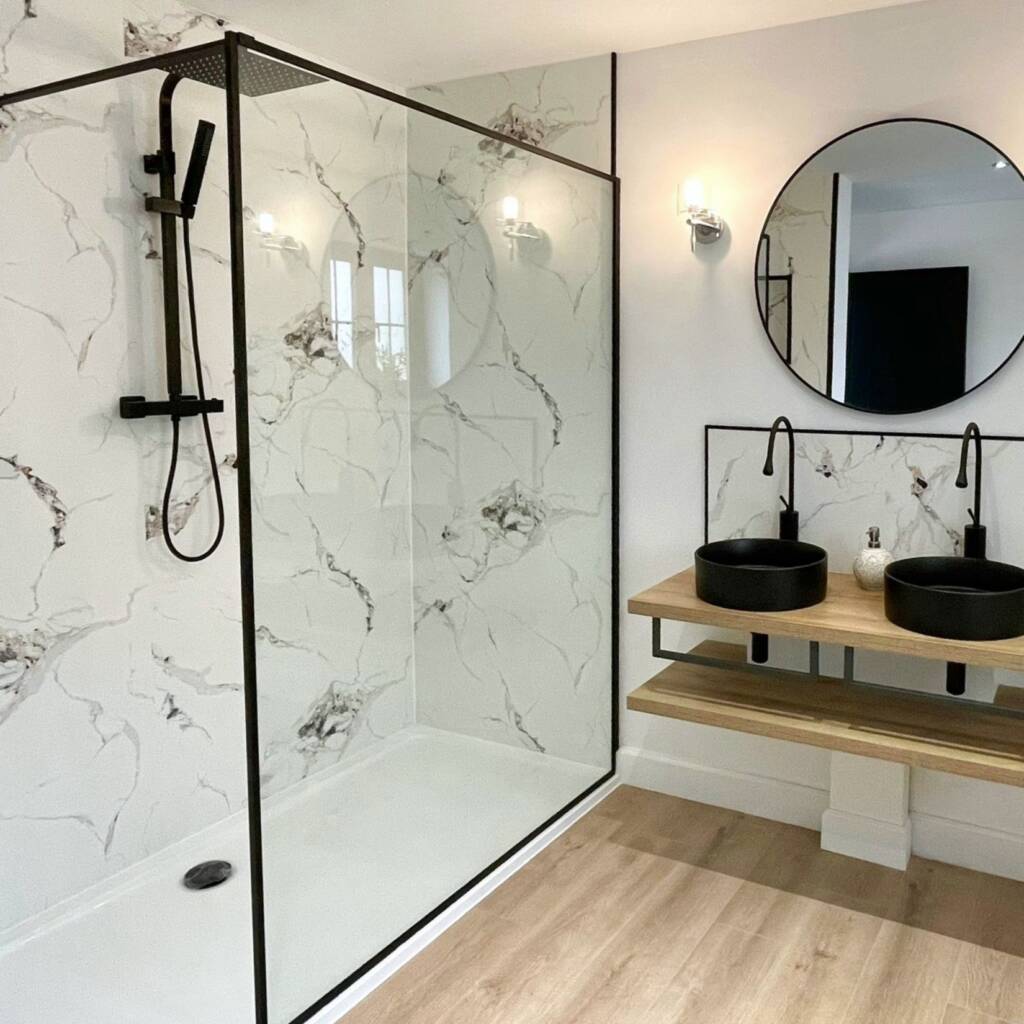
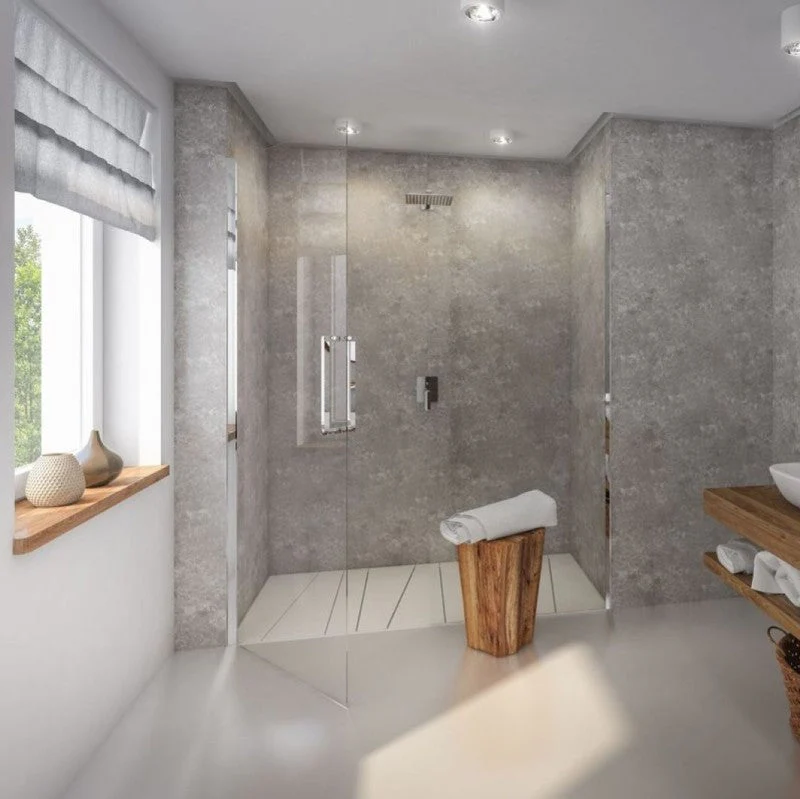
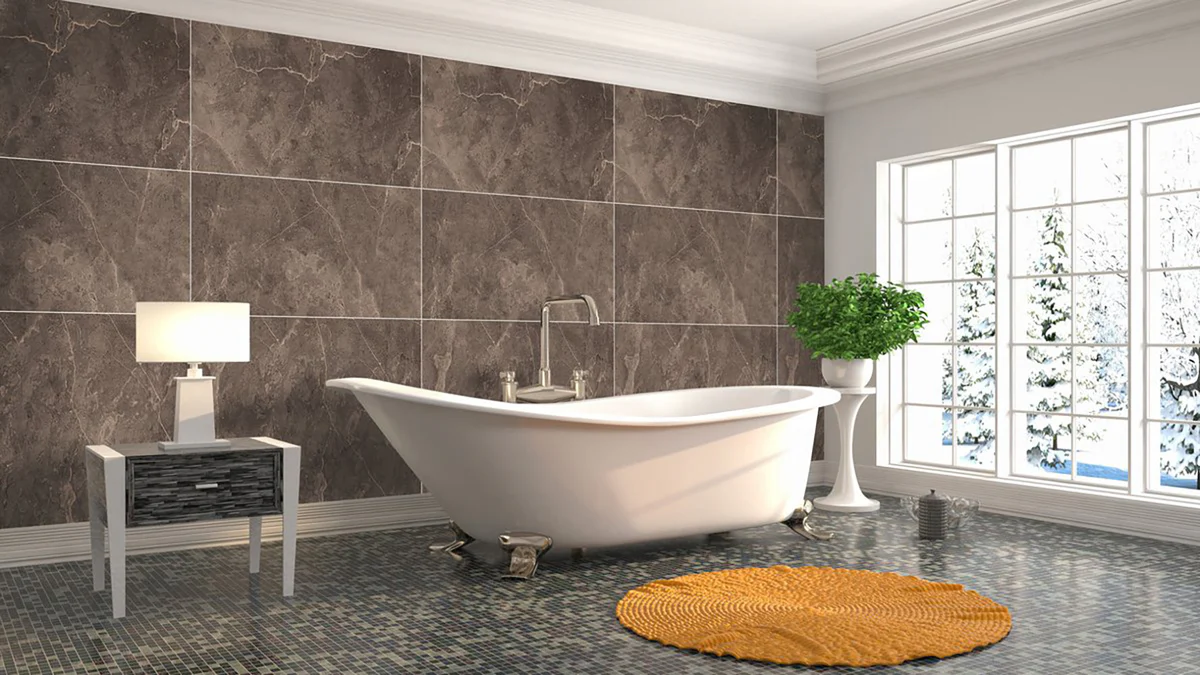
Instead of building a surface from many small elements, shower panels present the wall as a single finish. Marble, stone, gloss, and textured effects run across large sections, creating a calmer, more uniform backdrop that works particularly well in walk-in showers, en-suites, and contemporary bathrooms.
While shower panels can appear more limited at first glance, the range of finishes available covers most modern and transitional bathroom styles. In many cases, panels achieve the intended look with fewer visual breaks and far fewer compromises once the bathroom is in use.
Tiles suit projects driven by decorative detail; shower panels prioritise consistency, sealed surfaces and fewer points of failure.
Installation & Disruption
Shower panels are fitted in large sections rather than individual pieces. Once the wall is prepared, panels are measured, cut, and fixed directly in place. There is no spacing stage and no grouting, which removes two of the most time-consuming parts of a tiled installation.
Tiles require a multi-stage process. Each tile must be positioned, spaced, and left to set before grouting begins. Grout then needs time to cure before sealing and use, extending the overall installation timeline.
For most homeowners, installing shower panels is achievable using standard tools and careful preparation. Tongue and groove edges help control alignment and reduce the margin for error. Tiling demands greater precision, particularly to keep grout lines straight and consistent across the wall.
Tiles can still be used successfully, but the process is slower and more sensitive to mistakes, especially in smaller bathrooms or en-suites.
Wondering if you can fit shower panels yourself? Read our DIY installation guide.
Waterproofing & Moisture Resistance
Shower panels create a continuous waterproof surface with very few joins. Water is shed directly from the panel face, reducing the chance of moisture reaching the wall behind. With fewer joints across the surface, there are fewer pathways for water to travel beyond the visible finish.
Tiles themselves are water-resistant, but overall waterproofing depends on how well joints remain sealed. Grout forms the barrier between tiles, and as it ages or develops fine cracks, moisture can pass through joints and sit behind the tiled surface.
Over time, shower panels retain a sealed wall surface with minimal intervention, while tiled walls rely on joints remaining intact to prevent moisture ingress.
Maintenance & Cleaning Over Time
Shower panels are easier to maintain because the wall surface is uninterrupted. Soap residue, shampoo splashes, and limescale can be wiped away quickly using a soft cloth and mild cleaner, without needing to work around joints or textured areas.
Tiled walls require more ongoing attention. Grout lines need regular cleaning to prevent discolouration and may require resealing or replacement over time. In busy bathrooms, corners and joints are where maintenance tends to concentrate, particularly where moisture lingers after use.
Over the long term, this difference becomes noticeable in both time and effort. Shower panels maintain a consistent finish with routine cleaning, while tiled walls often demand deeper cleaning or periodic regrouting to keep them looking the same.
Cost Comparison: Bathroom Panels vs Tiles
Shower panels usually come out cheaper overall once materials, installation time, and ongoing maintenance are taken into account.
A shower panel kit, which includes the panels, trims, and accessories needed for installation, typically costs between £200 and £300. Everything is supplied together, removing the need to source multiple components separately.
Individual shower panels start from around £50 for a 2400mm x 1000mm x 10mm panel, allowing costs to be scaled depending on the size of the space. Installation only requires standard DIY tools, plus panel adhesive and silicone sealant, which usually cost around £6 each. Shower panels can also be fitted directly over existing tiles, provided they are secure and undamaged, reducing preparation time and avoiding the cost of tile removal or reboarding.
Tiling costs are less straightforward. While tiles can appear inexpensive per square metre, additional expenses quickly add up. Adhesives, grout, spacers, sealers, cutting tools, and trims are all required, alongside a longer installation process. Labour costs are higher where professional fitting is needed, and maintenance costs increase over time due to cleaning products, regrouting, and repairs.
Durability & Finish Consistency Over Time
Wall finishes rarely fail all at once. More often, small changes appear gradually as materials age and wear unevenly over time.
With tiles, grout lines tend to change at a different pace to the tiles themselves. Even when tiles remain intact, joints can darken or deteriorate unevenly due to regular cleaning, moisture exposure, and repeated temperature changes. Over time, this can leave walls looking patchy, particularly in high-use shower areas and corners.
Shower panels behave differently because the wall surface is formed from continuous boards rather than individual pieces. Colour, texture, and surface finish tend to change uniformly across the wall, with fewer joints where wear can affect appearance.
This also reduces long-term risk. Panels remain stable once fixed, while tiled walls depend on grout and adhesive staying intact as they age, increasing the likelihood of repairs over time.
Repair and Replacement
Shower panels make future repairs far simpler because the wall finish is made up of larger, independent sections. If a panel is damaged or needs replacing, it can usually be removed without disturbing the surrounding area.
Tiles are less forgiving when repairs are needed. Replacing a cracked tile often affects those around it, particularly if grout has bonded tiles tightly together over time. Matching replacement tiles can also be difficult years after installation, which can leave repairs looking uneven or inconsistent.
From a long-term perspective, shower panels offer more flexibility. Changes to fittings, upgrades to the shower area, or isolated damage can be addressed without stripping back the entire wall.
Shower Panels vs Tiles: Which Works Best?
For most bathrooms, the better option is the one that reduces future problems rather than adding flexibility at installation.
Tiles work well when a specific layout, pattern, or decorative detail is essential to the design. That flexibility comes with trade-offs: more joins, reliance on grout, longer installation, and a higher chance of maintenance issues developing over time. In bathrooms used daily, grout is usually the first point of failure.
Shower panels suit bathrooms where reliability matters more than layout variation. Large panel formats reduce the number of joins, which limits moisture pathways and removes the need for grout altogether. That makes panels easier to clean, quicker to install, and less sensitive to long-term wear in wet areas.
For most family bathrooms, en-suites, and replacement projects, shower panels are the more predictable choice. They simplify installation, reduce ongoing maintenance, and avoid many of the issues that lead to repairs or rework years later. Tiles still have a place, but panels remove several of the common failure points that cause bathrooms to age poorly.
Sleek, Waterproof Shower Panels for Your Space
Shower panels work across walk-in showers, over-bath installations, and enclosed cubicles, with sizes and finishes that make it easier to cover full wall runs without unnecessary joins. Styles include gloss, marble, stone, and sparkle finishes, allowing walls to stay consistent without relying on grout lines or complex layouts. We also offer solid core shower panels, which feature heavier, more rigid construction for bathrooms where walls see heavier use.
Free samples are available so you can check finish tone, surface detail, and panel thickness in your own lighting before ordering. Panels can be purchased individually or as complete shower wall panel kits with trims and accessories included, helping you plan installation with fewer decisions to make along the way.