
Acoustic slat wall panels reduce echo in open spaces while adding depth and texture to plain walls. They’re widely used on media walls, in home cinemas, offices, and bedrooms where clearer sound is needed alongside a decorative finish. The felt backing absorbs noise, while the slatted surface introduces dimensions that flat coverings like paint or wallpaper can’t achieve.
Read MoreShowing 1–20 of 22 resultsSorted by latest
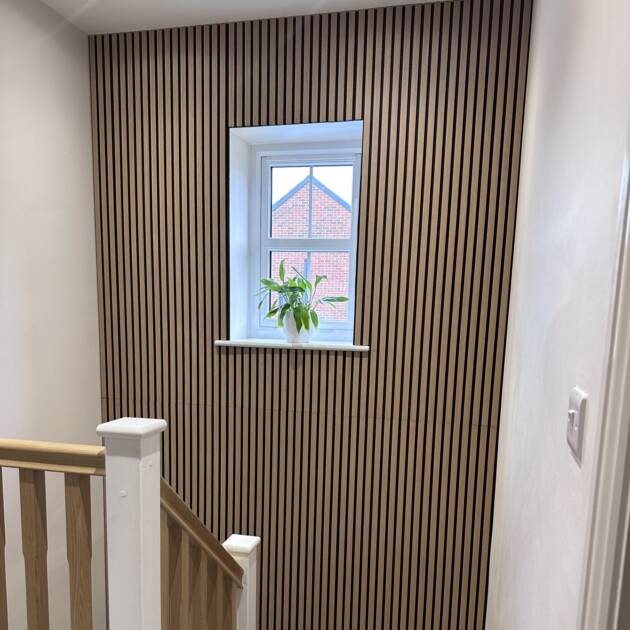
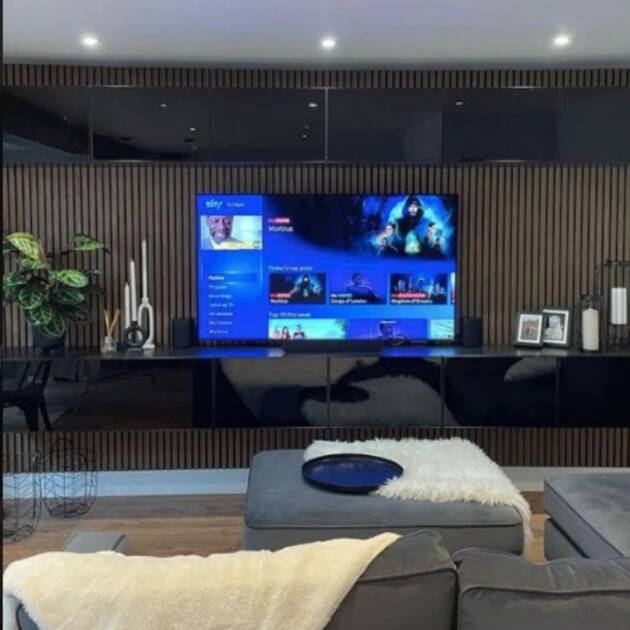
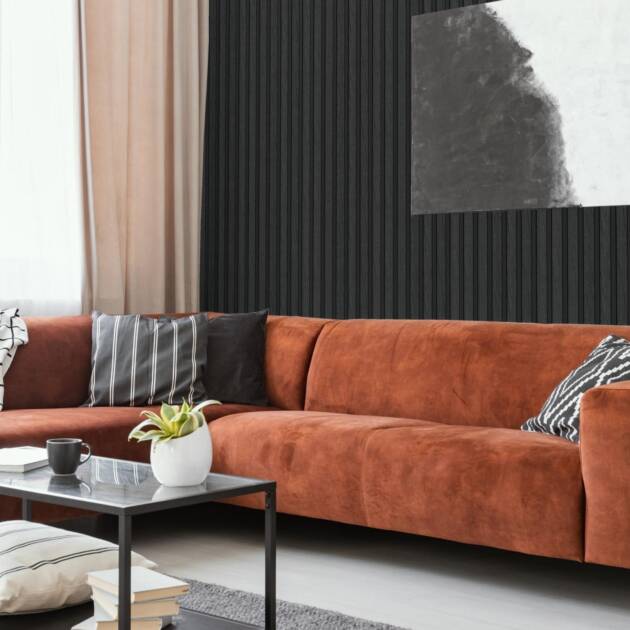



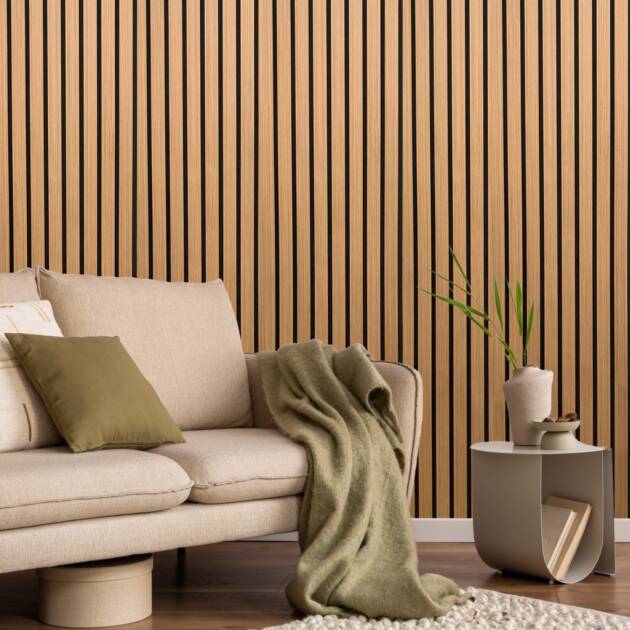
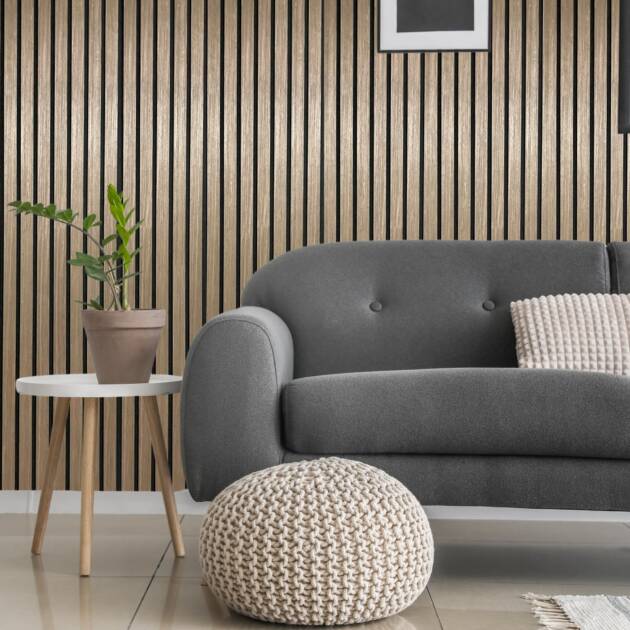


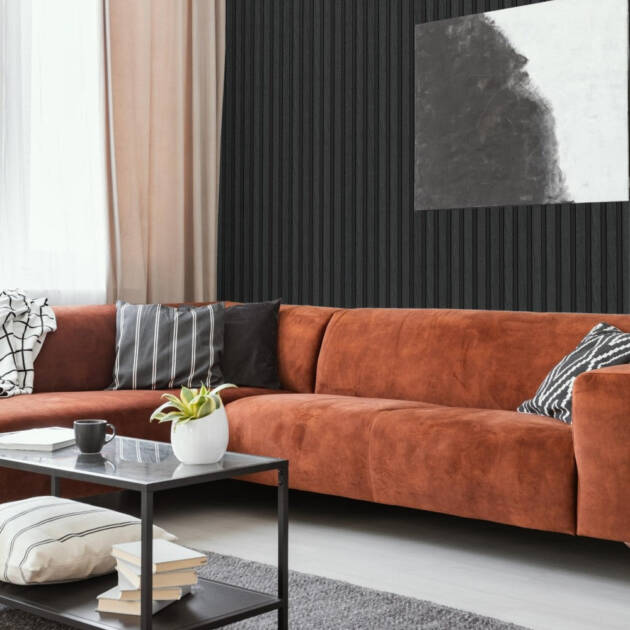
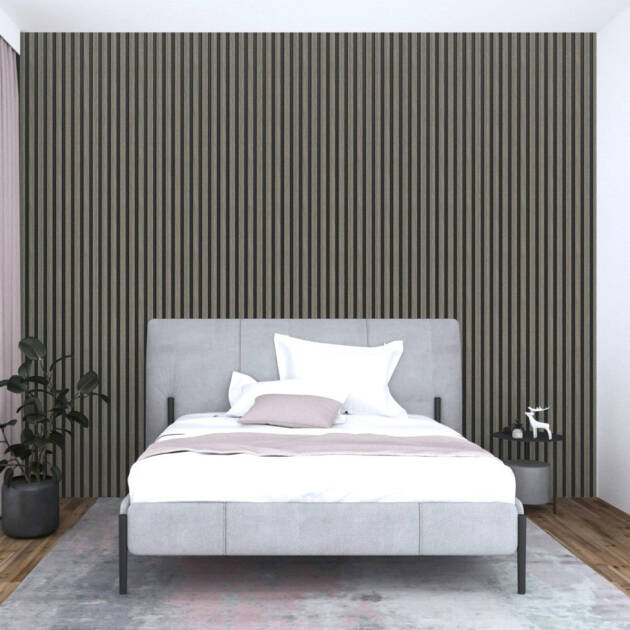

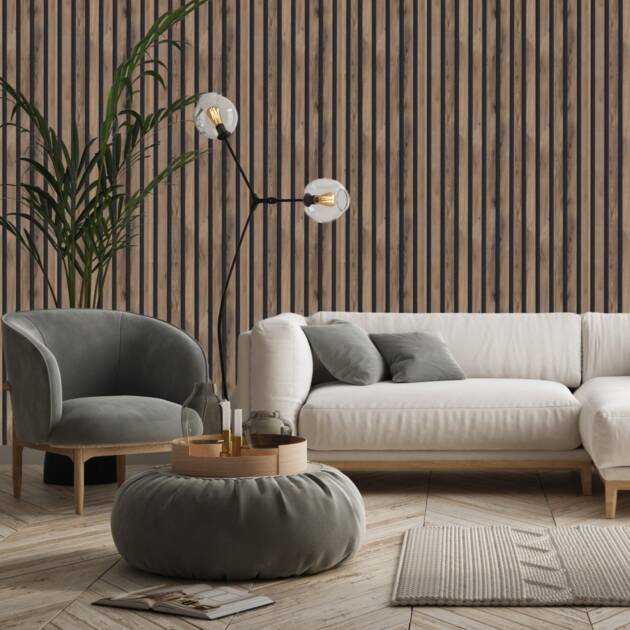


Acoustic Slat Wall Panels in Wooden and Metallic Finishes
Acoustic wall panelling in oak and walnut are often chosen to introduce warmth in living rooms, bedrooms, or offices, where a natural grain gives walls a softer look. Darker tones such as charcoal or black are commonly used on media walls, helping reduce glare around screens while adding contrast. White, grey, and silver birch panels can make smaller rooms feel brighter and more open without relying on paint that quickly marks.
For a stronger design statement, copper, gold, or brushed metallics create feature walls suited to dining rooms, lobbies, and commercial interiors. Panel format also affects the result: slim slats deliver finer detail, while wide-lat panels introduce bolder lines across larger walls. Sulcado and Value ranges allow you to achieve these looks at different price points.
Free samples are available across the full range, so you can compare finishes in your own space before placing a full order.
Slim vs Wide Acoustic Slats: What’s the Difference?
The spacing of each slat changes both the look and the acoustic effect of a wall. Slim slats create more frequent breaks across the panel, increasing the felt backing exposed between each strip. This helps absorb higher levels of echo while giving walls a finer, more detailed profile suited to compact rooms or media spaces.
Wide-lat panels expose less felt between each strip, which still improves sound quality but with a stronger visual impact. The bolder lines work well across larger walls in open-plan homes, offices, or lobbies, where reducing reverberation is important without losing a statement feature.
Both options deliver the same reliable noise absorption overall, but the difference lies in how much surface is exposed to sound and how the wall feels visually once installed.
Why Choose Acoustic Wall Panels?
Paint, wallpaper, and tiles all reflect sound, amplifying echo and reducing clarity in larger spaces. Acoustic wall panelling tackles this issue directly, absorbing noise while adding a decorative finish that’s built to last. The slatted profile provides depth and dimension, turning flat walls into features with both visual and acoustic value.
Installation is straightforward, with panels fixing directly to flat surfaces using adhesive or screws. Tongue-and-groove edges lock boards securely together, so both DIY projects and trade installations can achieve a consistent, professional result with less effort.
Benefits of Acoustic Wall Panelling
- Reduces echo and improves clarity in media rooms, offices, and bedrooms.
- Decorative finishes in wood tones, colours, and metallic options.
- Slim and wide-lat formats to suit different proportions.
- Straightforward fitting over secure surfaces, even tiles.
- Wipe-clean surfaces that resist everyday marks.
Expert Guidance with Every Acoustic Wall Panel Order
Every order of acoustic slat wall panels comes with clear support, reliable delivery, and long-term guarantees to make fitting and maintenance straightforward.
- Free Samples Before You Commit: Compare tone, texture, and finish at home before placing a full order.
- Fast, Secure UK Delivery: Panels are carefully packaged for safe arrival, with prompt dispatch across the country.
- Warranties of Up to 10 Years: Extra reassurance that your panels will perform well after installation.
- Specialist Help on Hand: From adhesives and trims to installation advice, our team is ready to assist.
- Guides and Resources: Step-by-step instructions show how to prepare walls, cut panels, and achieve a secure fit.
- Trade Discounts Available: Extra benefits for contractors fitting multiple rooms or commercial projects.
Frequently Asked Questions
Do acoustic panels completely block noise between rooms?
No, acoustic panels absorb sound within the room they’re installed in rather than blocking it between spaces. They reduce echo and reverberation, which improves clarity, but full soundproofing requires additional construction layers such as insulation or specialist boards.
How thick are the panels, and does thickness affect performance?
Most acoustic slat wall panels are around 18-25mm thick, with a felt backing that enhances absorption. Thickness helps manage mid to high-frequency sounds, so you’ll notice improvements in speech clarity and reduced echo without needing bulky materials.
Can acoustic panelling be installed on ceilings?
Yes, panels can be fixed overhead to reduce echo in open-plan rooms, studios, or commercial spaces. Secure fixing and correct preparation are important when fitting to ceilings, and lighter finishes are often chosen to avoid making a room feel closed in.
Is additional insulation needed behind the panels?
Not necessarily. The felt backing already absorbs a significant amount of echo, but in larger or noisier spaces, some customers install them over acoustic insulation for greater performance. This depends on how much sound control you want to achieve.
Do acoustic wall panels affect room temperature?
They don’t provide full thermal insulation, but the felt backing can soften hard surfaces slightly, reducing cold resonance compared to bare plaster or tiles. For energy efficiency, we’d recommend insulative cork wall panels.
How long does installation usually take?
Most DIY projects can be completed in a day, depending on room size. Panels are designed to be fitted quickly with adhesive or screws, and tongue-and-groove edges keep alignment simple.
Can I mix acoustic panels for walls with other decorative finishes?
Yes. They’re often paired with upholstered wall panels in bedrooms for added softness, cork wall panels for natural texture, or ceiling panels to extend the look vertically. This creates a layered effect without compromising acoustic benefits.